
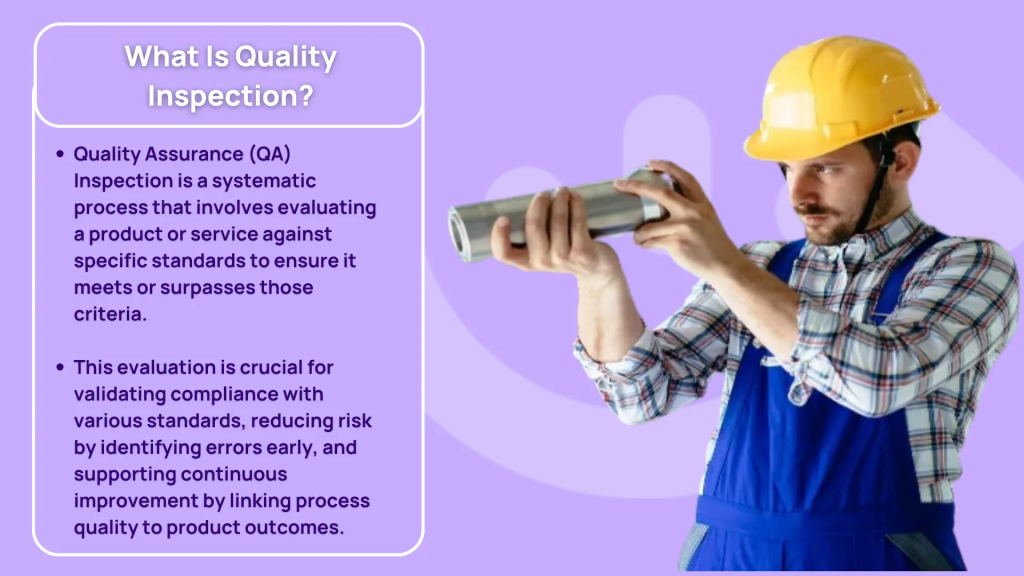
Quality is no longer a choice in the current competitive manufacturing environment. Companies are supposed to provide quality and flawless products with the management of highly intricate global supply chains. Even one quality lapse can result in recalls, loss of money and brand image. This is why firms are putting more money in systematic inspection systems that make sure that there is reliability at all levels.
However, it is not easy to keep quality on top of various vendors, production lines, and locations. It involves skill, uniformity, and objectivity. This is where third-party inspection partners come in, which provides a methodical manner of checking and confirming the quality of the products throughout the production process.
Why Third-Party Inspection Matters
Manufacturers usually use internal teams to control quality, yet internal processes may occasionally fail to notice the latent problems. The gaps in inspection can be caused by prejudice, time, or the absence of specific tools. The introduction of a foreign specialist provides an additional level of control that enhances the quality system as a whole.
Standardized procedures, trained inspectors and industry-specific knowledge are brought by a professional Inspection Company. They are objective when it comes to products and quality standards are not compromised. This does not only minimize the chances of faulty deliveries but also instills trust among the customers and stakeholders.
Key Stages in End-to-End Inspection Programs
End-to-end inspection programs are intended to check the quality throughout the production lifecycle. They do not just do final checks but ensure that problems are detected and fixed at an early stage, thus saving them the hassle of redoing work and wastage of time.
This process normally starts with pre-production inspections, which involves checking of raw materials and initial setups. It then passes over to in-line checks in the manufacturing process which enables on-the-fly corrections. Lastly, pre-dispatch inspection is done to make sure that the finished goods have been in accordance to specification before they are dispatched. Such a multi-layered strategy forms an effective safety net against defects.
Core Functions of an Inspection Partner
An inspection partner has various roles in the production cycle. They do not merely check but also participate in the improvement of the processes and the reduction of risks.
- Pre-production Check: Checks the quality of raw materials and components and the manufacturing process starts.
- In-line Monitoring: Monitors the quality of production in real time and defects are detected at the initial stage.
- Final Random Inspection: Tests the completed products according to the sampling criteria to ascertain uniformity.
- Checks Compliance: Confirms compliance with regulatory, safety and client-specific requirements.
- Reporting and Documentation: Provides detailed reports with images, measurements, and defect analysis for transparency.
The functions assist businesses to have control over the quality even when production is outsourced or geographically distributed.
Challenges in Implementing Inspection Programs
Although it has its benefits, there are also challenges associated with the implementation of a strong inspection system. Coordination among the manufacturers, suppliers and inspectors is one of the common problems. Failure to communicate properly may result in a delay or unequal application of standards in various production locations.
The other issue is the consistency of the inspection criteria. In the absence of a clear set of benchmarks, the results can be different among the inspectors or the locations. To make sure that inspections are effective and reliable in the long run, companies should invest in standardized protocols and ongoing training.
Why End-to-End Inspection Is a Strategic Advantage
Quality can be a distinguishing factor in a world market where competition is high. Firms that have elaborate inspection schemes are in a better position to provide uniform products and develop trust in customers over time. It is not merely a matter of not getting defects, but establishing a reputation of reliability.
In addition, end to end inspection offers useful information on production processes. Through inspection data analysis, businesses can determine common problems, streamline the working processes, and enhance efficiency. This transforms inspection into an active approach to ongoing enhancement as opposed to a reactive one.
Conclusion
A good Product Inspection program cannot be a single event but is a lifelong process that is carried throughout the production lifecycle. Through collaborating with established inspection companies, companies can access knowledge, objectivity, and systematic practices that would guarantee the same quality results.
Finally, being an inspection partner is not just about product inspection. It is about creating a system that avoids defects, compliance and enhances trust throughout the supply chain. This method is no longer an option, but a necessity to companies that want to grow without sacrificing quality.